Ace Your System Design InterviewInteractive Practice & Tutorials
Learn distributed systems, scalability patterns, and architecture design through hands-on practice. Drag components, simulate production architectures, and get instant feedback on your designs.
STEP 01
Functional Requirements
Start by defining what your system must do. Describe the core features and user capabilities. An AI interviewer guides you with follow-up questions to ensure you cover all essential requirements.
- Define core user actions and system behavior
- AI feedback highlights missing requirements
- Iterate until you reach 100% coverage
"Users can shorten long URLs and get redirected when visiting short links..."
"What about link expiration? Should users be able to set custom aliases?"
STEP 02
Non-Functional Requirements
Define performance constraints: latency targets, throughput goals, and availability requirements. The AI interviewer ensures you think about scalability, consistency, and reliability.
- Set P95 latency and RPS targets
- Define availability and consistency needs
- Consider read/write ratios and data retention
STEP 03
API Design
Design the HTTP endpoints your service exposes. Define request/response formats, HTTP methods, and paths. The AI ensures you cover all necessary endpoints with proper documentation.
- Define endpoints with HTTP methods
- Document request/response payloads
- AI validates completeness and best practices
Create a new short URL
Redirect to original URL
Get click analytics
STEP 04
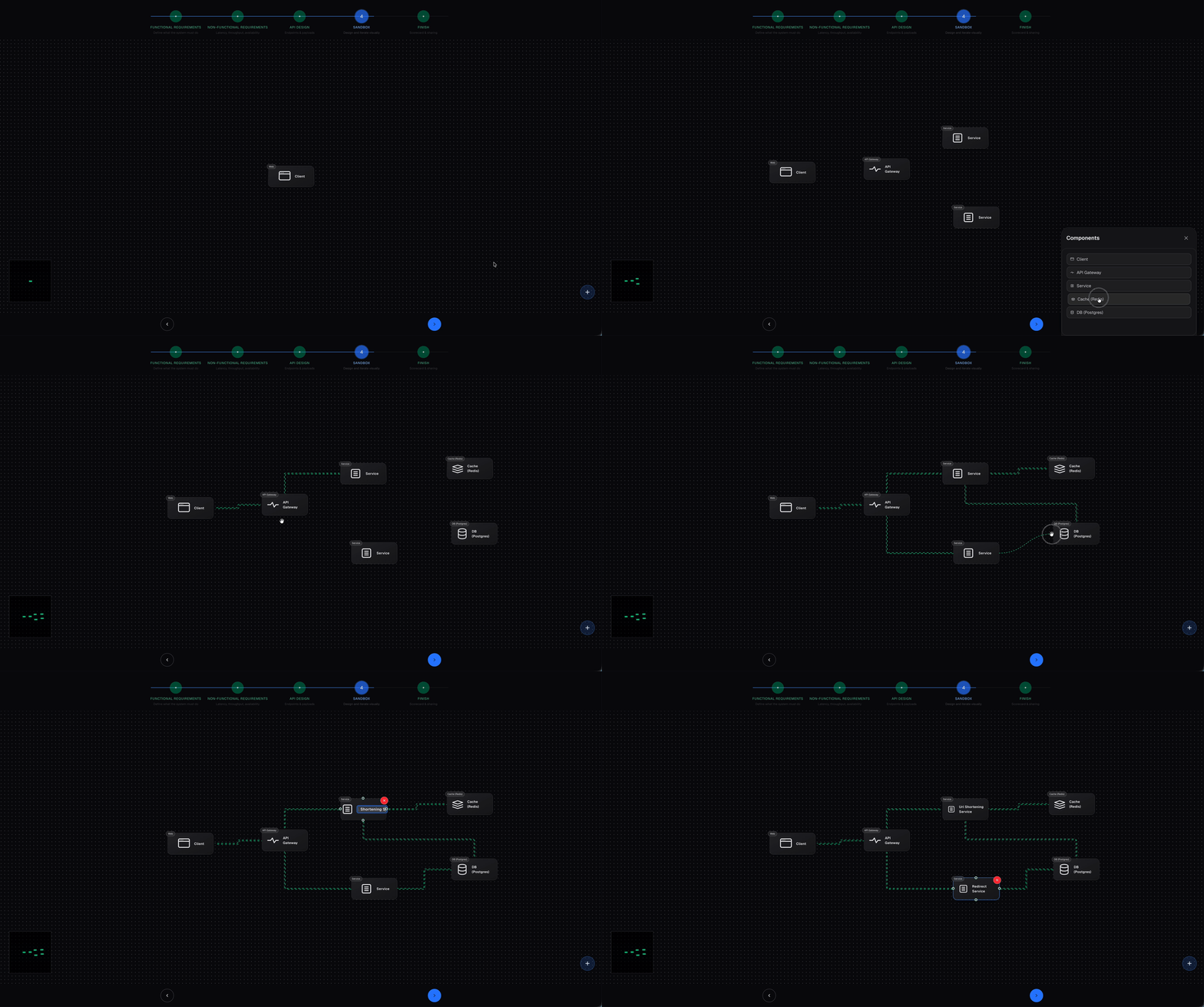
Design Sandbox
Build your architecture visually with drag-and-drop components. Connect services, databases, caches, and load balancers. Run simulations to validate your design meets the requirements.
- Drag-and-drop architecture components
- Real-time simulation with P95 latency
- Iterate until SLO targets are met
STEP 05
Score & Share
Get your final scorecard with detailed feedback on each step. Share your solution via URL or continue practicing to improve your score. Bonus points are available for going beyond the basics.
- Detailed scorecard for each step
- Bonus points for advanced features
- Share your solution via URL
Practice Scenarios
Master the basics with URL Shorteners and Rate Limiters, then tackle complex scenarios like WhatsApp, Leaderboards, and Payment Systems.
1. URL Shortener - Hashing & Encoding
2. Pastebin - Object Storage & TTL
3. Rate Limiter - Sliding Window & Token Bucket
4. Notification System - Message Queues & Fan-out
5. WhatsApp - WebSockets & Presence
6. Leaderboard - Redis Sorted Sets & Skip Lists
7. Ticketmaster - Optimistic vs. Pessimistic Locking
8. Job Scheduler - How Cron Works at Scale
9. Payment System - Double-Entry Accounting in SQL
10. Dropbox - Merkle Trees & Block Level Sync
11. Web Crawler - Bloom Filters & DNS Caching
12. YouTube - How CDNs & Adaptive Streaming Work
• Throughput calculations & database sizing
• CAP theorem, scaling, object storage & CDN
• Rate limiting algorithms, message queues
• WebSockets & real-time communication
Frequently Asked Questions
Everything you need to know about system design interview preparation
How do I prepare for a system design interview?
Start by practicing with interactive scenarios like our URL shortener tutorial. Focus on understanding distributed systems, scalability patterns, and architecture trade-offs. Practice designing systems end-to-end, from requirements gathering to capacity planning. Our platform provides instant feedback on your designs to accelerate learning.
What is system design and why is it important?
System design is the process of defining the architecture, components, and data flow of large-scale software systems. It's crucial for building scalable, reliable applications and is a key evaluation criterion in senior engineering interviews at top tech companies.
What are the most common system design interview questions?
Common questions include designing URL shorteners, social media feeds (Twitter/Instagram), video streaming platforms (Netflix/YouTube), messaging systems (WhatsApp), ride-sharing apps (Uber), and e-commerce sites (Amazon). Each teaches different scalability and architecture patterns.
How long does it take to learn system design?
With focused practice, you can learn core system design concepts in 4-8 weeks. Our interactive platform accelerates learning by providing hands-on practice with real-time feedback. Practice 3-4 scenarios per week to build strong fundamentals for your system design interview.
Is System Design Sandbox free to use?
Yes! System Design Sandbox is completely free. We provide interactive tutorials, practice scenarios, and instant feedback at no cost. Our mission is to make high-quality system design education accessible to everyone preparing for technical interviews.
Ready to Ace Your System Design Interview?
Start practicing with real-world scenarios. No theory, just hands-on experience with instant feedback on your architectural decisions.